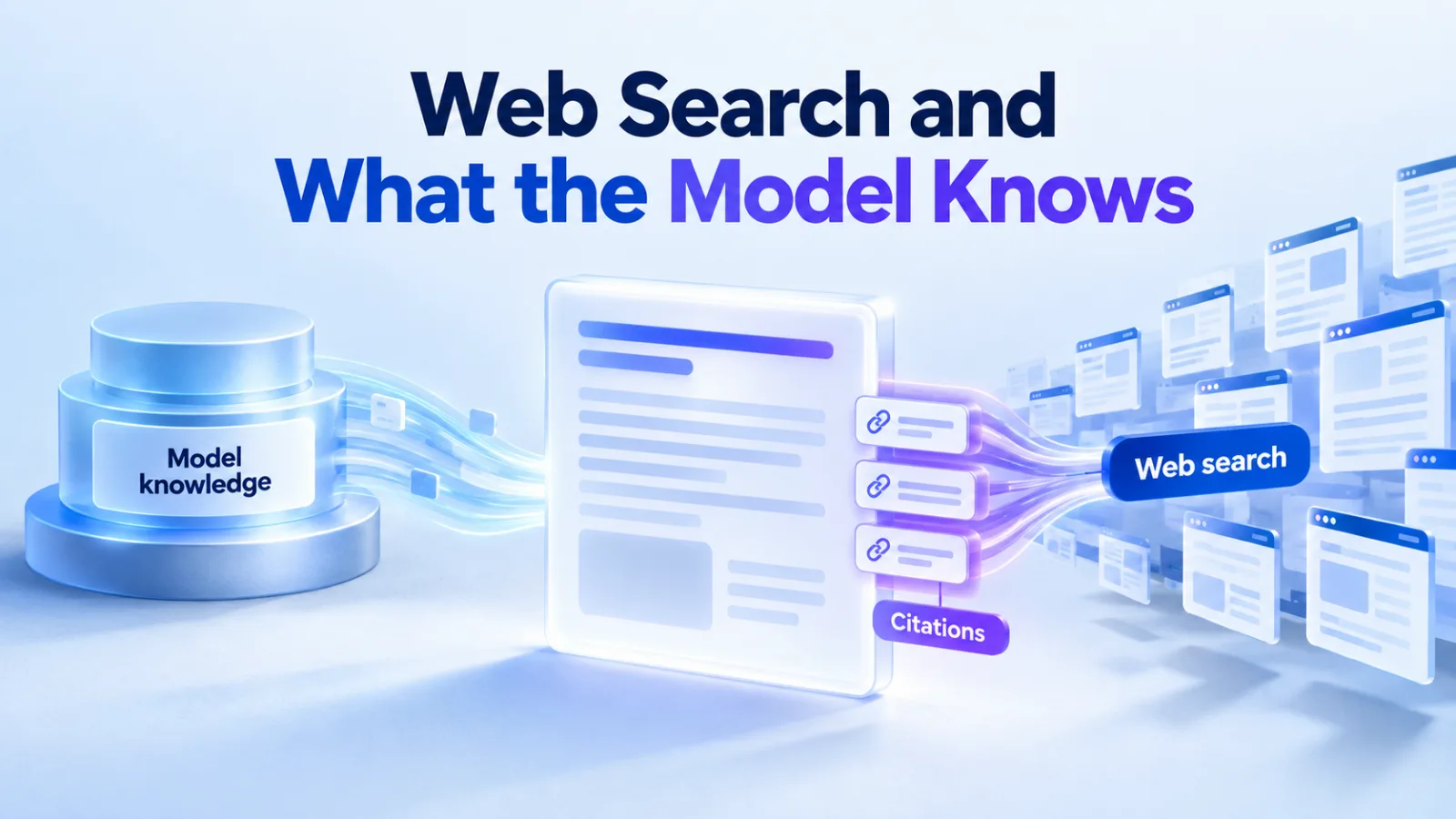
When ChatGPT answers with links, it’s usually searching the web as it goes. When it answers without them, it’s drawing on what its models already know. OpenAI documents more about the first than the second, and it says plainly that placement isn’t guaranteed. Here’s what OpenAI has published about how ChatGPT finds, ranks and cites websites, and what that means for yours.
Checked against OpenAI’s Help Center and developer docs on 27 September 2026. Where we give our own view, we say so.
Two ways into an answer
| Route | How it works | Source |
|---|---|---|
| Web search | ChatGPT searches when a question would benefit from current information, and the answer can cite the pages it used. | Help Center |
| Model knowledge | The model answers from what it learned in training. For shopping, OpenAI says ChatGPT considers its own responses before any new search results. | Help Center |
How a search happens
- ChatGPT decides to search, automatically when current information would help, or because the person chose the Search tool.
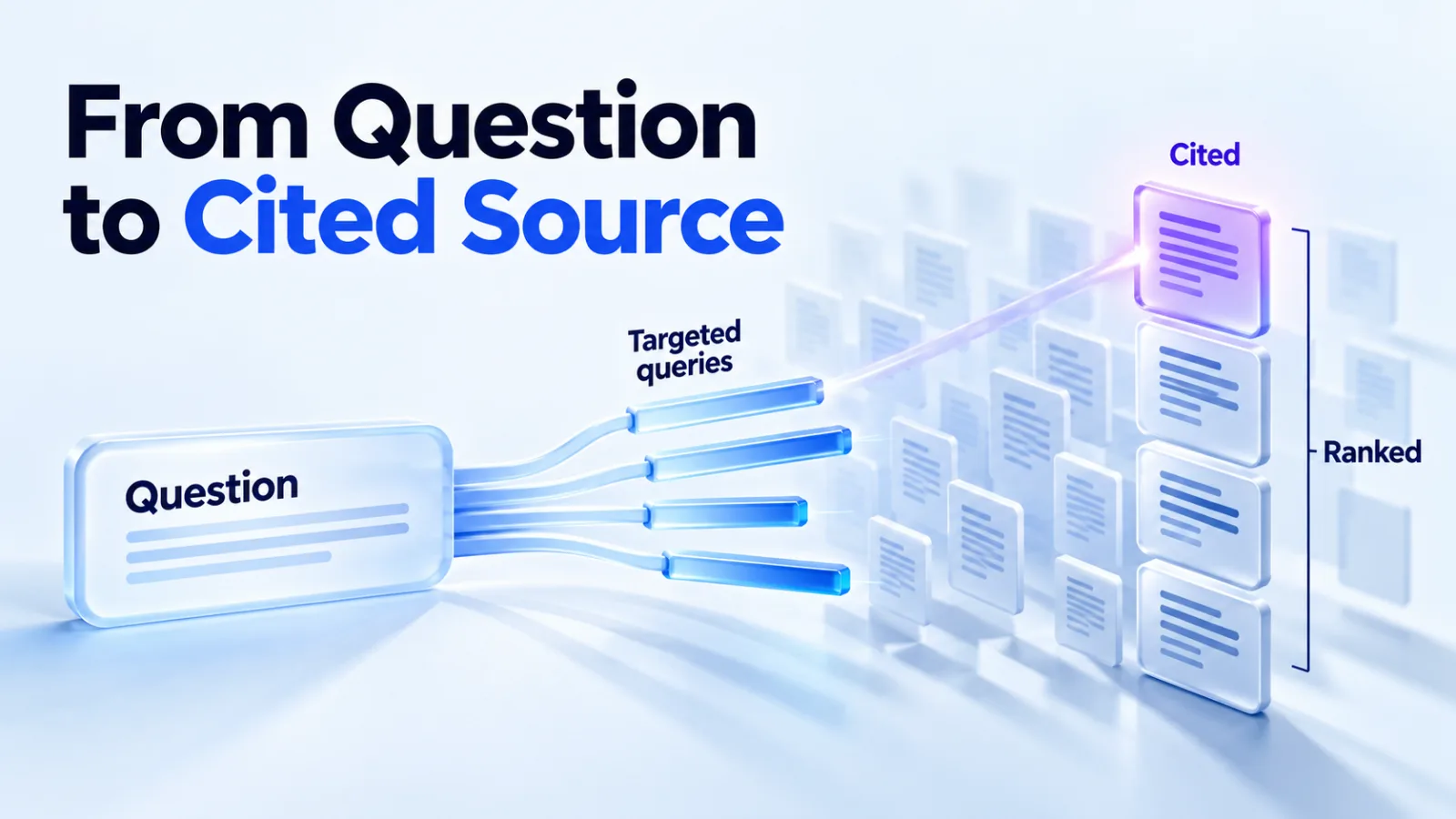
- It rewrites the question into one or more targeted queries. OpenAI’s example turns a long question about cancer drugs into “CCR8 immunotherapy drug development 2025”.
- It may use search partners, sending them those rewritten queries, then send more specific follow-up queries after reading the first results. OpenAI’s help page points to Microsoft’s and Shopify’s privacy policies for how providers handle queries.
- Context shapes the query. An approximate location from the person’s IP address can be added, such as turning “restaurants near me” into “top restaurants San Francisco”, and saved memories can be used too.
- It ranks and cites. OpenAI says it ranks results using multiple factors meant to surface relevant, reliable information. Answers can include citations, and a Sources panel lists cited pages and other relevant links.
OpenAI doesn’t publish its ranking factors. Anyone promising a formula for ChatGPT rankings is guessing. What OpenAI does publish is the entry requirement.
The entry requirement: OAI-SearchBot
OpenAI says any public website can appear in ChatGPT search. To be eligible, your site must let OAI-SearchBot crawl it, and your host or CDN must allow traffic from OpenAI’s published search-bot IP addresses. Sites that block it won’t be shown in search answers, though they can still appear as plain navigational links. Changes to robots.txt take about 24 hours to reach search.
| Crawler | What it does | Affects search? |
|---|---|---|
| OAI-SearchBot | Surfaces websites in ChatGPT’s search features. | Yes. Block it and you’re out of search answers. |
| GPTBot | Crawls content that may be used to train OpenAI’s models. | No. It’s independent of search. |
| ChatGPT-User | Visits a page when a person’s request needs it. Not an automatic crawler, and robots.txt may not apply. | No. OpenAI says it isn’t used to decide what appears in search. |
| OAI-AdsBot | Checks pages submitted as ads. | No. It only visits ad landing pages. |
Because the settings are independent, you can allow OAI-SearchBot and block GPTBot: you stay eligible for search without offering your content for training. If both are allowed, OpenAI may use one crawl for both purposes.
Blocked pages can still show up as links
OpenAI’s publisher FAQ adds a detail many sites miss. If it learns the URL of a page you’ve disallowed, from a search partner or from links on other pages, and the page looks relevant, the ChatGPT Atlas browser may still show its link and title. To prevent that, use a noindex meta tag, and let the crawler reach the page so it can read the tag.
Shopping and local results
- Products are chosen from structured product data from merchants and third-party providers, the model’s own answers and OpenAI’s safety policies. Review summaries come from reviews on public websites. More in our guide to getting products into ChatGPT shopping.
- Local answers use approximate location, and ChatGPT may share location with trusted third-party providers of business listings. Restaurant reservations come from OpenTable, Resy or Yelp, depending on the restaurant and country.
Ads are a separate system
OpenAI says ads don’t influence ChatGPT’s answers, and that product results aren’t ads and aren’t influenced by its partnerships. Buying ads won’t get you cited. Our guide to paid and organic visibility in ChatGPT covers how the two fit together.
What this means for your site
Our view, based on what OpenAI has published:
- Check robots.txt, your firewall and your CDN actually let OAI-SearchBot in. It’s the one requirement OpenAI states.
- Decide on GPTBot separately, as a training question, not a search one.
- Since ChatGPT rewrites questions into specific queries, publish pages that answer specific questions clearly, with the facts stated plainly.
- Keep product data, reviews and business listings accurate wherever they appear, because third-party sources feed shopping and local results.
Questions
Does ChatGPT use Google results?
OpenAI says ChatGPT search sometimes partners with other search providers, and its help page links Microsoft’s and Shopify’s privacy policies. It doesn’t name Google.
If I block GPTBot, will I disappear from ChatGPT?
Not from search. Search eligibility depends on OAI-SearchBot, which is separate.
How long after allowing OAI-SearchBot will I appear?
OpenAI says robots.txt changes take about 24 hours to reach search. Being eligible doesn’t guarantee a place in any answer.
Can I pay to be cited?
No. OpenAI says ads don’t influence answers and product results aren’t ads.
Sources
- Searching the web with ChatGPT, OpenAI Help Center
- Publishers and developers FAQ, OpenAI Help Center
- Shopping with ChatGPT search and Ads in ChatGPT, OpenAI Help Center
- Overview of OpenAI crawlers, OpenAI developer docs
All sources checked on 27 September 2026.