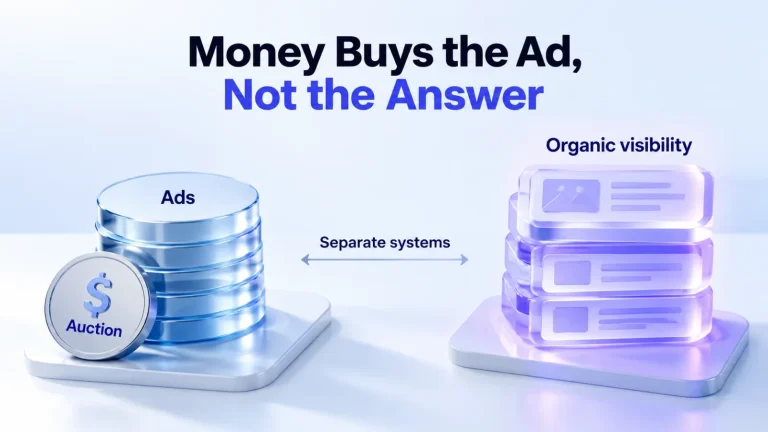
There are two ways for a business to show up in ChatGPT. Ads are paid placements below the answer. Organic visibility means being among the websites, sources and products ChatGPT itself chooses to show. The two run on separate systems, and OpenAI says money buys only the first. This guide explains how each works, what each needs from your website, and where the two meet.
Figures are OpenAI’s unless labeled as reported. Where we give our own view, we say so.
The short answer
- Ads appear below the answer, labeled as sponsored, and are chosen by an auction.
- Organic visibility happens inside the answer, and no payment can buy it.
- Each side depends on a different OpenAI crawler, and you should allow both.
- OpenAI describes the two as separate systems, so an ad budget doesn’t improve organic visibility.
- Measure the two separately, because they behave differently.
ChatGPT Ads and organic visibility at a glance
The table compares the two side by side. The rest of the guide explains each row.
| Topic | ChatGPT Ads | Organic visibility |
|---|---|---|
| Where | Below the end of a response, labeled as sponsored. | Inside the answer: search results, sources and product results. |
| Who decides | An auction that weighs relevance and bids. | ChatGPT, independently of ads and of OpenAI’s partnerships. |
| Cost | Per click or per impression. | Nothing, and no way to pay for placement. |
| Your levers | Targeting, bids, context hints, creative and landing pages. | Crawl access, useful content and accurate product data. |
| Crawler | OAI-AdsBot reviews ad landing pages. | OAI-SearchBot surfaces sites in ChatGPT search. |
| Guarantee | None. Context hints don’t guarantee delivery. | None. OpenAI says placement is not guaranteed. |
Ads don’t buy answers
OpenAI says ads don’t influence ChatGPT’s answers. They run on systems separate from the chat model, and advertisers can’t shape, rank or change its responses. Ads are paid placements, and OpenAI says seeing one doesn’t mean it endorses the advertiser.
The same goes for shopping. OpenAI says product results are selected independently by ChatGPT, aren’t ads, and aren’t influenced by any OpenAI partnership.
So an ad budget can put you below an answer, in a labeled placement. It can’t get you mentioned in the answer itself. A business that wants both has to work on both, and each side has its own rules.
How organic visibility works
Organic visibility has three routes: websites in search answers, products in shopping results, and sources cited in written answers. They share one principle. ChatGPT decides what to show, from the information it can reach.
Websites in search answers
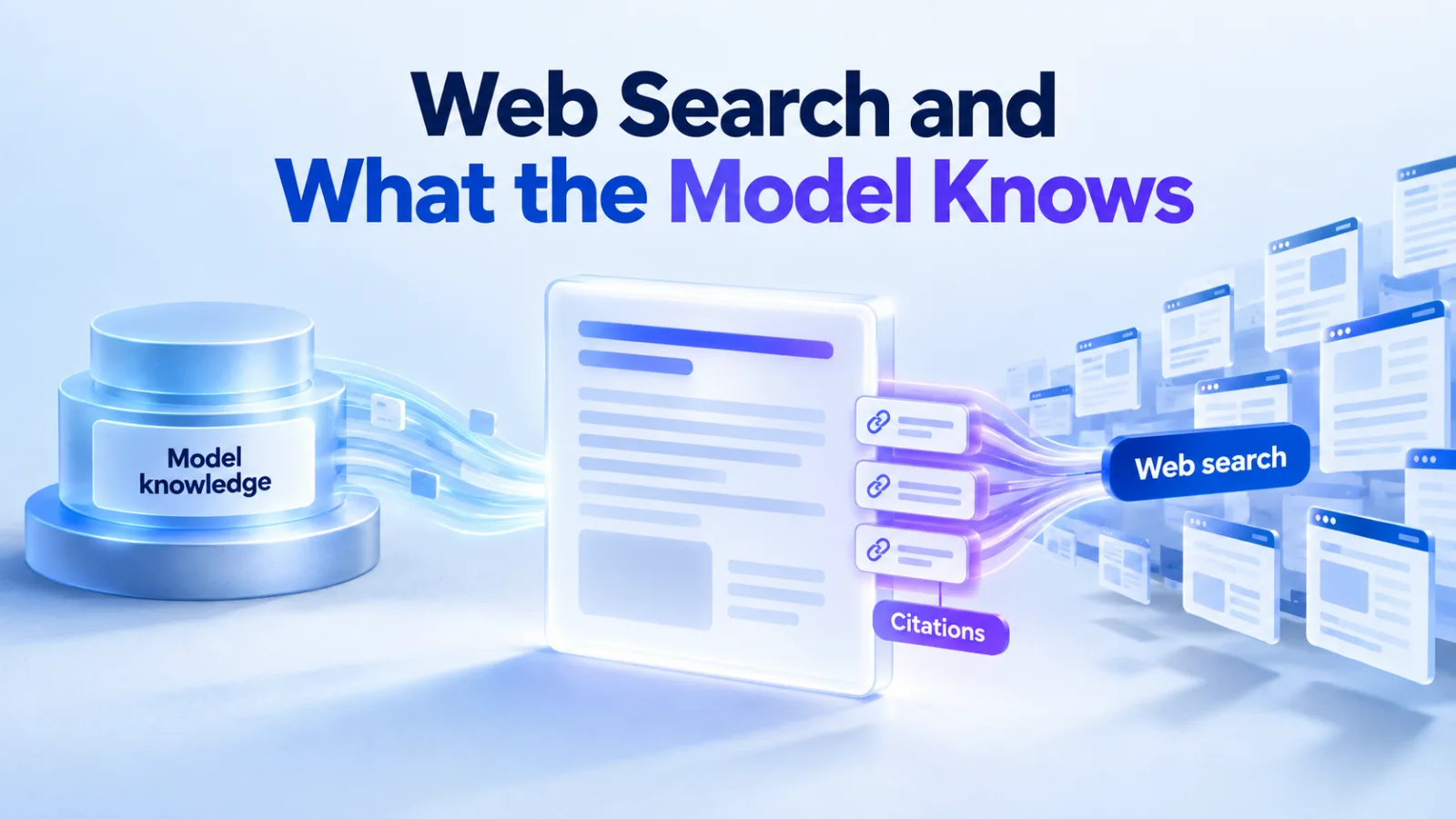
ChatGPT can search the web when a question would benefit from current information. OpenAI says web search is available on every plan, including to people who aren’t signed in. Responses that use it may include citations that link to the sources.
OpenAI says ChatGPT ranks search results using multiple factors intended to help people find relevant, reliable information. It also says placement isn’t guaranteed. Our guide to how ChatGPT chooses its sources goes deeper on what is and isn’t documented.
ChatGPT search sometimes works with other search providers. When it does, it typically rewrites the person’s question into one or more targeted queries and sends those on. It also uses an approximate location, so the same question can bring different local results in different places.
Products in shopping results
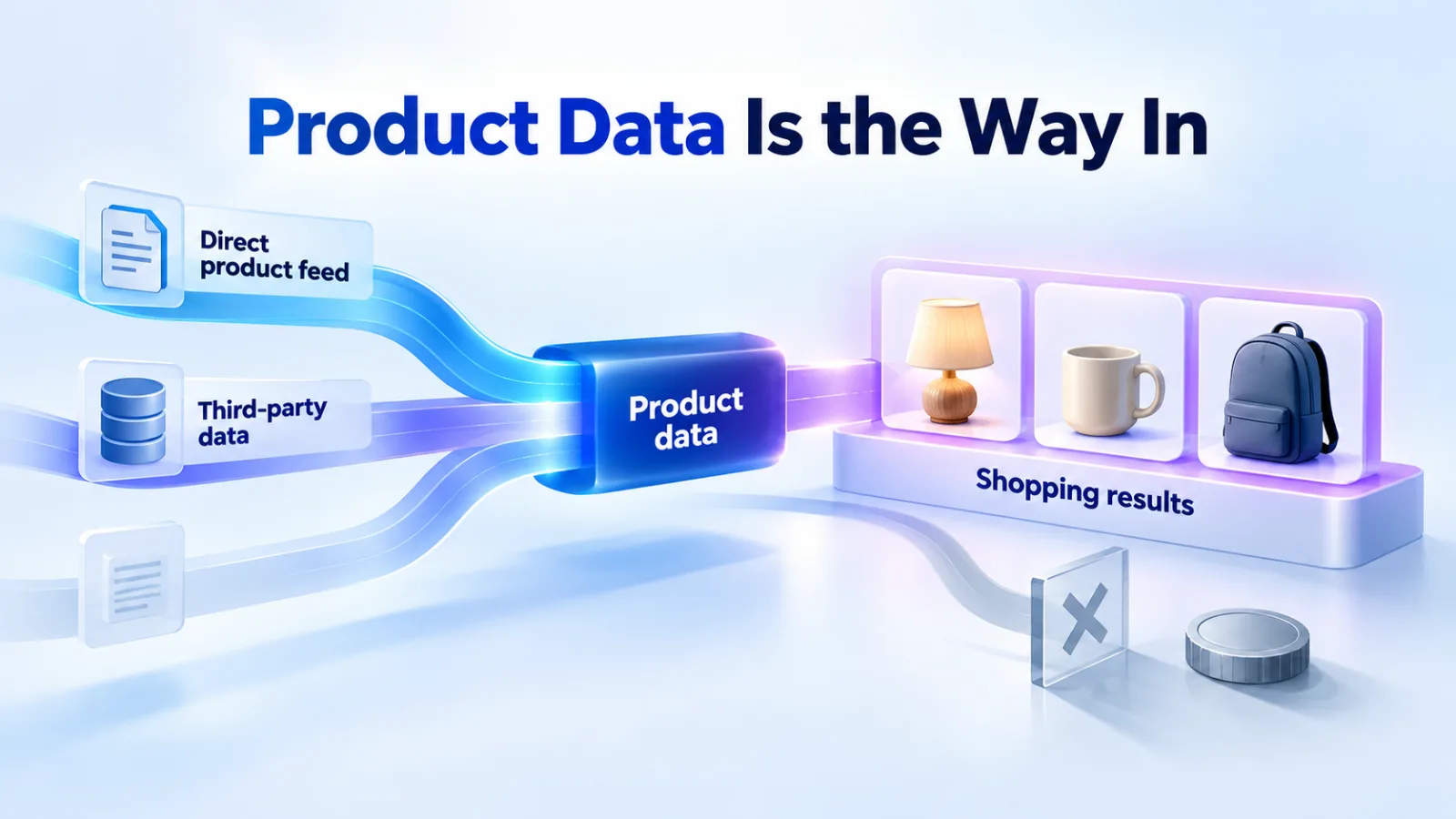
When a question suggests shopping intent, ChatGPT can show products with images, prices and links. OpenAI says it considers the person’s query and context, structured product data from merchants and third-party providers, and its safety standards.
When several merchants sell the same item, it ranks them on availability, price and quality. It also considers whether the merchant makes or mainly sells the product. Shopify merchants’ products already reach ChatGPT through Shopify Catalog. Other merchants can apply to send OpenAI a product feed directly. See getting products into ChatGPT shopping for the details.
Sources in written answers
Not every answer uses search, because OpenAI says ChatGPT may search when a question would benefit from current information. What decides whether a brand is named in an answer with no search is much less documented. We cover what is known, and what isn’t, in how to get your brand mentioned in ChatGPT.
What makes a site eligible
OpenAI’s guidance for publishers is short. Any public website can appear in ChatGPT search. To help your content be discovered and cited, don’t block OAI-SearchBot.
For eligibility, OpenAI says to allow OAI-SearchBot to crawl the site. Make sure your host or content delivery network lets in traffic from OpenAI’s published searchbot IP addresses. It also says search can take about 24 hours to adjust after a robots.txt change.
| Check | What to look for |
|---|---|
| robots.txt | OAI-SearchBot isn’t disallowed on the pages you want found. |
| Firewall and CDN | The host allows OpenAI’s published searchbot IP ranges, and bot protection doesn’t return a 403. |
| Page access | The page loads without a login, a challenge or a script a crawler can’t run. |
| noindex | Used only on pages you want out. A crawler must be allowed in to read the tag. |
What if you block the crawler
OpenAI says sites that opt out of OAI-SearchBot won’t be shown in ChatGPT search answers. They can still appear as navigational links. It adds one more case. Suppose it learns a blocked page’s address from another search provider, and the page looks relevant. It may then show just the link and title in Atlas. A noindex tag is how to avoid that, and the crawler has to be allowed in to see it.
One crawler for each side
Paid and organic visibility each depend on a different OpenAI crawler, and two others are easy to confuse with them.
| Crawler | What it does | What blocking it changes |
|---|---|---|
| OAI-SearchBot | Surfaces websites in ChatGPT search | Your site won’t be shown in search answers, though links can still appear |
| OAI-AdsBot | Validates pages submitted as ads, and helps judge when an ad is relevant | Ads that link to the page can be rejected |
| GPTBot | Collects content that may be used to train OpenAI’s models | Signals your content shouldn’t be used for training. It doesn’t affect search or ads |
| ChatGPT-User | Visits a page when a person asks ChatGPT to | robots.txt rules may not apply, because a person triggered the visit |
OpenAI says each setting is independent of the others. A site can allow OAI-SearchBot to appear in search and disallow GPTBot to opt out of training. For ads, OpenAI says you must allow OAI-AdsBot and recommends allowing both it and OAI-SearchBot.
Our guide to how ChatGPT chooses its sources covers every crawler in more detail.
Two more things OpenAI documents for site owners
The publisher FAQ covers two points beyond search eligibility.
Agents and page structure
OpenAI says its ChatGPT agent in Atlas uses ARIA tags to interpret a page’s structure and interactive elements. These are the labels and roles that also support screen readers. It recommends following WAI-ARIA practice, with descriptive roles, labels and states on buttons, menus and forms. That helps the agent see what each element does.
Training
To keep pages out of potential model training, OpenAI says to disallow GPTBot. It says it respects that signal for content gathered through Atlas. Pages that opt out of GPTBot won’t be trained on, even if a person opts in to training. The choice is separate from search, so it doesn’t cost you search visibility.
Where paid and organic meet
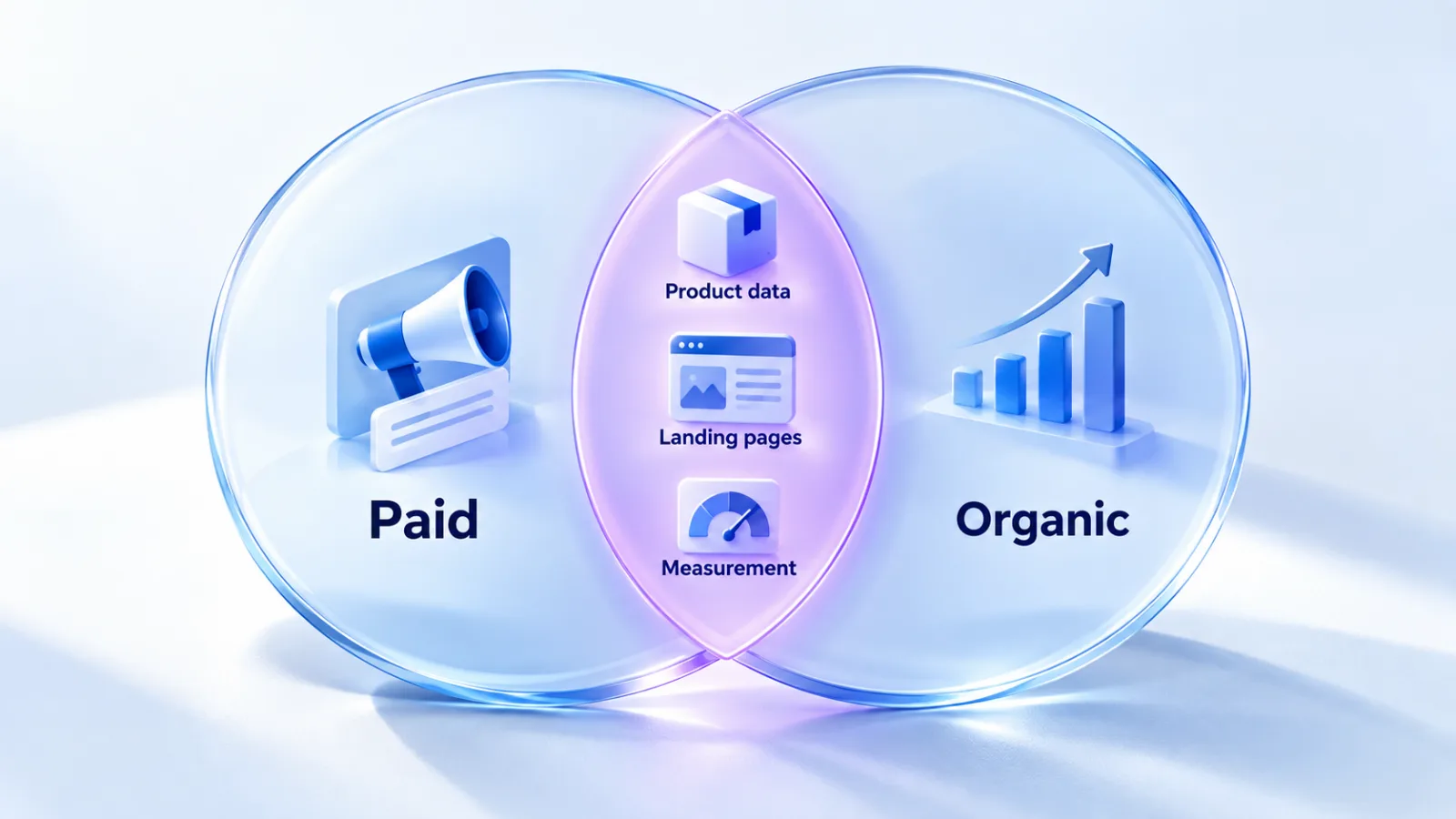
The two sides run separately, but they share three things you control.
Product data
OpenAI’s product file format carries separate flags for search, checkout and ads. A catalog can therefore say where each product may be used. A feed you create inside Ads Manager is a different route. OpenAI’s Help Center says products from that feed are eligible only for ads during the beta. Our product feed guide covers the paid side.
Landing pages
The page an ad links to has to be open to OAI-AdsBot, and OpenAI recommends allowing OAI-SearchBot too. A page that works for both serves paid and organic visits.
Measurement
Paid clicks and organic visits both arrive from ChatGPT, and your analytics can blur them. OpenAI says ChatGPT adds utm_source=chatgpt.com to referral links from its search results. That makes organic traffic easy to find. For paid clicks, you add your own tags. Our guide to ad clicks showing as Direct covers the setup, and measuring brand visibility in ChatGPT covers the organic side.
Which lever for which business
Our view: the right mix depends on what you sell and how fast you need to be present.
| Your situation | Start with | Why |
|---|---|---|
| A new brand that nobody searches for yet | Ads, plus open crawlers | Ads put you in front of buyers now. Organic visibility takes time to earn. |
| An established site with good content | Crawl access first | Organic visibility costs nothing but a robots.txt check, and it may already be working. |
| An online store | Both, from the same catalog | Shopping results and product ads can draw on the same product data. |
| A local service | Ads with locations, plus accurate listings | Both sides use approximate location, so local detail matters. |
| B2B software | Ads for high-intent questions, plus clear pages | Buyers ask detailed questions, and your pages answer them. |
The table is our view. OpenAI publishes no benchmarks comparing the two.
What goes wrong
Four mistakes recur, in our view.
Treating ads as a route to being mentioned
An ad budget doesn’t change what ChatGPT says. If you want to be named in an answer, ads aren’t the lever.
A crawler blocked without anyone knowing
Bot protection, a firewall rule or a CDN setting can return a 403 to OpenAI’s crawlers. The site still looks fine to people. OpenAI’s guidance notes that these systems often return 403 errors to legitimate crawlers. Test the crawler’s path, not just robots.txt.
One dashboard for both
Paid and organic traffic behave differently. Keep them in separate rows in your analytics, so a good month for one doesn’t hide a bad month for the other.
Waiting for a guarantee
Neither side offers one. OpenAI says placement in search isn’t guaranteed, and that context hints don’t guarantee ad delivery. So plan around a test you can measure.
Two examples, side by side
Two businesses show how the same facts lead to different first moves. Both examples are illustrative.
| First week | Local plumber | Online store |
|---|---|---|
| Crawlers | Check robots.txt and the host’s bot rules for OAI-SearchBot and OAI-AdsBot | The same, plus the image host, because feed processing can fail on a 403 |
| Data | Make service areas and hours accurate on the site | Make the catalog accurate, through Shopify Catalog or a feed |
| Paid | A small campaign targeted to the service area | Product ads from a feed, once the catalog is clean |
| Measure | Tag ads with UTMs and watch calls and forms | Tag ads, and send purchase events with order value |
In both cases the free work comes first, because it costs nothing and may already be paying off.
What to watch on each side
Measure paid and organic with different numbers. Mixing them hides what each is doing.
| Side | What to watch | Where |
|---|---|---|
| Paid | Impressions, clicks, spend and conversions by campaign | Ads Manager, checked against your analytics |
| Paid | Sessions tagged with your own UTMs | Your analytics |
| Organic | Sessions with utm_source=chatgpt.com | Your analytics |
| Organic | Requests from OAI-SearchBot | Your server or CDN logs |
A request from OAI-SearchBot in your logs shows the crawler can reach you. It doesn’t show you’re being cited, so pair it with the referral count.
How we’d approach both
We’d do the cheap, certain things first, then spend where you can measure.
- Allow OAI-SearchBot and OAI-AdsBot, and check that your firewall and bot protection let them through.
- Keep product data accurate and current, whether through a feed or Shopify Catalog.
- Publish clear, factual pages that answer the questions buyers ask before they choose.
- Use ads for the moments you want to be present now, and measure paid and organic separately.
Questions
Will running ChatGPT ads improve my organic visibility?
No. OpenAI says ads don’t influence ChatGPT’s answers and run on separate systems. Organic visibility comes from your site being open to OAI-SearchBot and from the quality and accuracy of your pages and product data. An ad budget doesn’t change either.
Can I pay to appear in ChatGPT’s shopping results?
No. OpenAI says product results are selected independently and aren’t ads. Product ads are a separate, labeled placement that you pay for. They don’t change which products appear in shopping results.
If I block GPTBot, will I disappear from ChatGPT search?
Not by itself. OpenAI treats GPTBot and OAI-SearchBot as independent, and search visibility depends on OAI-SearchBot. Blocking GPTBot opts content out of training, and it doesn’t affect your ads.
Do my ads and organic listings use the same product data?
They can draw on the same catalog, but through different routes. OpenAI’s product file format carries separate eligibility flags for search, checkout and ads. A feed created in Ads Manager is eligible only for ads during the beta. See our product feed guide.
How do I know whether ChatGPT sends me organic traffic?
Look for utm_source=chatgpt.com in your analytics. OpenAI says it adds that parameter to referral links from ChatGPT search results, for sites that allow OAI-SearchBot. Paid traffic only shows up if you tag your ads yourself.
Does blocking OAI-AdsBot affect my search visibility?
OpenAI describes the two crawlers as separate. OAI-AdsBot only visits pages submitted as ads, and OAI-SearchBot handles search. Blocking one doesn’t switch off the other, but an ad’s landing page needs OAI-AdsBot to get in.
Should a small business start with ads or organic?
Open the crawlers first, because it costs nothing. Then decide on ads by what you can afford to test. OpenAI sets a daily minimum per campaign, $25 in US dollars, so a modest test is possible. Our 30-day test plan shows how to run one.
Who sees ChatGPT ads at all?
People on the Free and Go plans, in markets where ads have rolled out, and logged-out users. Paid plans don’t see ads. Web search, by contrast, is available on every plan, so organic visibility isn’t limited the same way. See who sees ChatGPT ads.
Where do I look for crawler access problems?
Start with your server or CDN logs and firewall events. Look for requests from OAI-SearchBot and OAI-AdsBot, and check whether they got a 200 response or a 403 or 429. OpenAI publishes IP ranges for each crawler, and its guidance says to allowlist by user agent where you can. Fix the block at the layer that returns it.
Want help with the paid side? Start with our services, or tell us what you’re trying to achieve.