There’s no price list for ChatGPT Ads. Prices come from an auction, and you control spend with a budget and a maximum bid. The minimum daily budget per campaign depends on your billing currency, $25 for accounts billed in US dollars, and OpenAI suggests starting click bids at $3–5. This guide covers how the pricing works, how you’re billed, and how to size a first test.
Checked against OpenAI’s documentation on 27 September 2026. Figures are OpenAI’s unless labeled as reported.
The short answer
| Topic | How it works | Source |
|---|---|---|
| Price | Set by a relevance-weighted, second-price auction among eligible ads. | Help Center |
| What you buy | Impressions (Views objective) or valid clicks (Clicks objective). Conversion-optimized campaigns also bill per impression or per click, never per conversion. | Help Center |
| Minimum | A daily minimum per campaign, set by your billing currency: 25 USD, 15 EUR, 15 GBP or 725 INR, for example. | Help Center |
| Starting bid | OpenAI suggests starting maximum bids of $3–5 per click for click campaigns. | Help Center |
| Pacing | A daily budget averages over a Sunday-to-Saturday week: up to twice the budget on one day, never more than seven times it in the week. | Help Center |
| Billing | Postpay. Your card is charged when unpaid spend reaches your payment threshold, and at month end. | Help Center |
How the auction sets your price
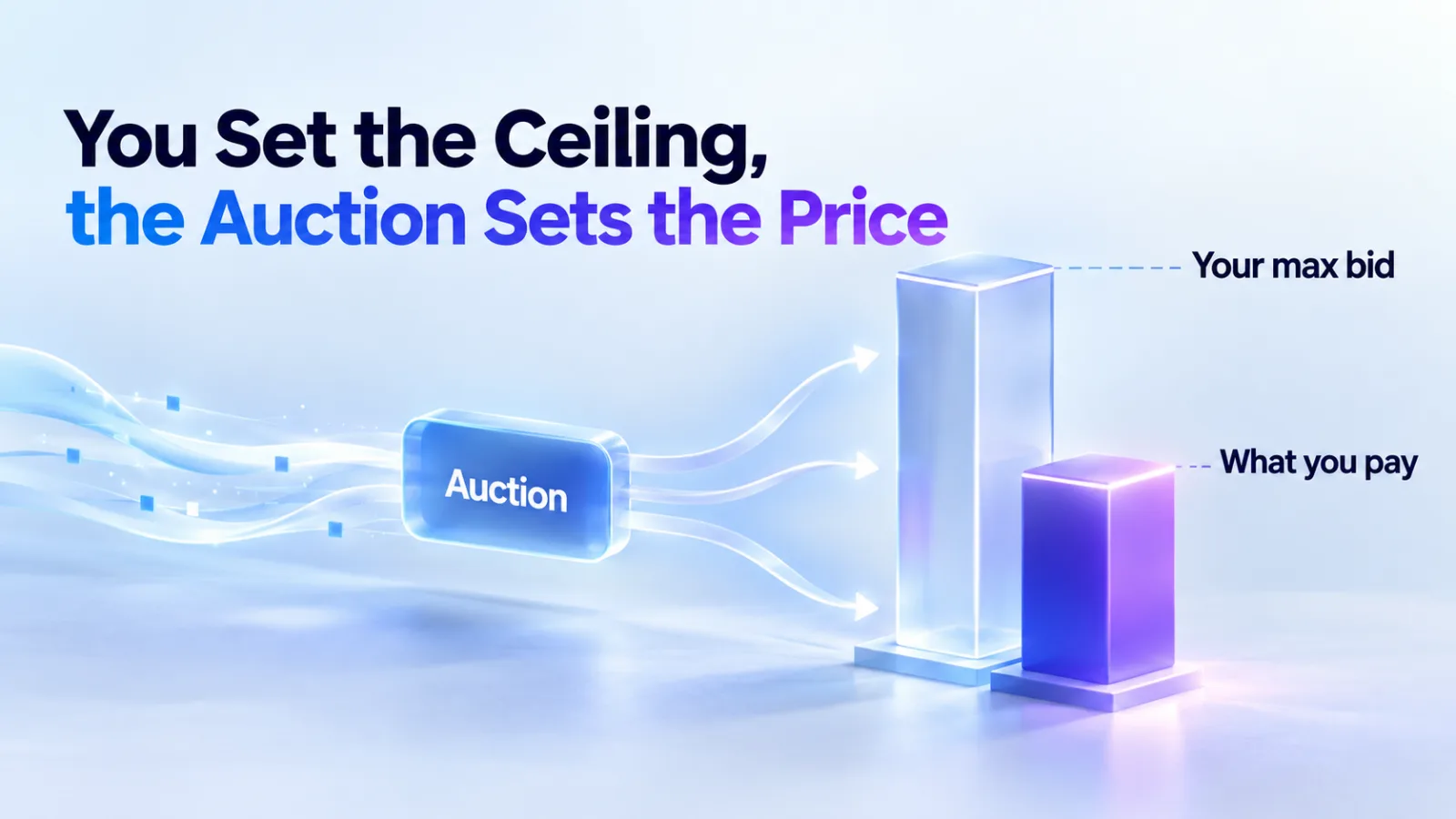
You set a maximum bid for each ad group: a maximum cost per click for click campaigns, or a maximum cost per 1,000 impressions for impression campaigns. When several ads are eligible for a conversation, OpenAI weighs relevance alongside bids to decide which shows first, and prices the winner in a second-price auction.
Two things follow. What you actually pay depends on who else is bidding for the same moments. And relevance counts, so a bid backed by a specific landing page, clear ad copy and well-written context hints is more likely to win. Ads Manager also shows bid-strength guidance: whether a bid looks competitive or may limit delivery.
Three ways to pay
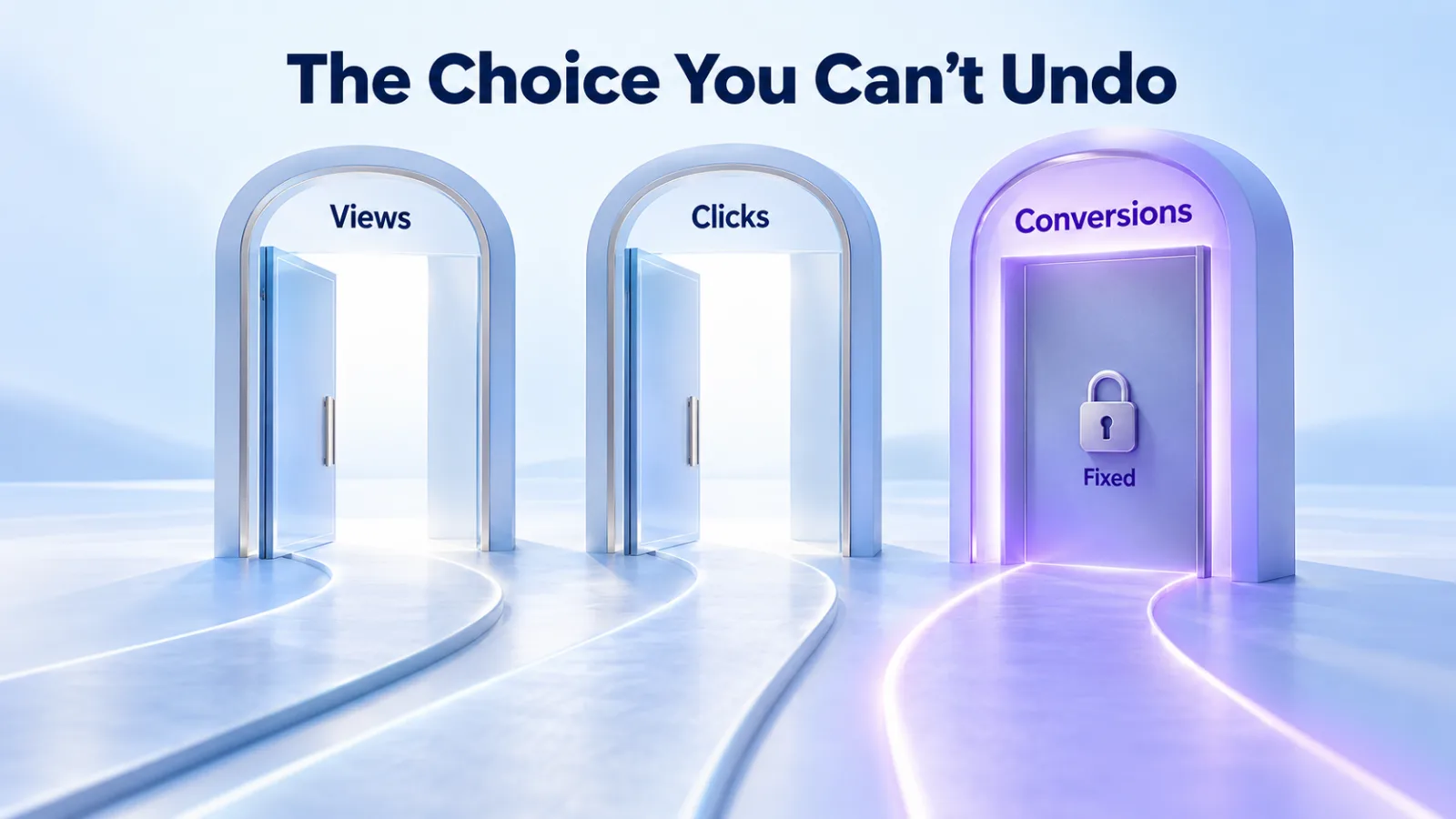
The campaign objective decides how you’re billed. It can’t be changed after the campaign is created.
| Objective | You’re billed for | Worth knowing |
|---|---|---|
| Views | Impressions served, priced per 1,000 (CPM). | Buys reach. OpenAI publishes no CPM benchmark. |
| Clicks | Valid clicks (CPC). | OpenAI’s suggested starting bid is $3–5 per click. |
| Conversions | Clicks (oCPC) or impressions (oCPM), chosen at setup. | Needs a standard conversion event. Impression billing is in beta, and OpenAI gives no recommended bid. |
With conversion optimization you set a bid cap: the most you’re willing to bid for a conversion. The system uses predicted conversion likelihood to bid in each auction, but you’re still billed per click or per impression, so your actual cost per conversion comes out of the auction.
Budgets: daily or total
Each campaign gets one of two budget types, and you can change the amount later but not the type.
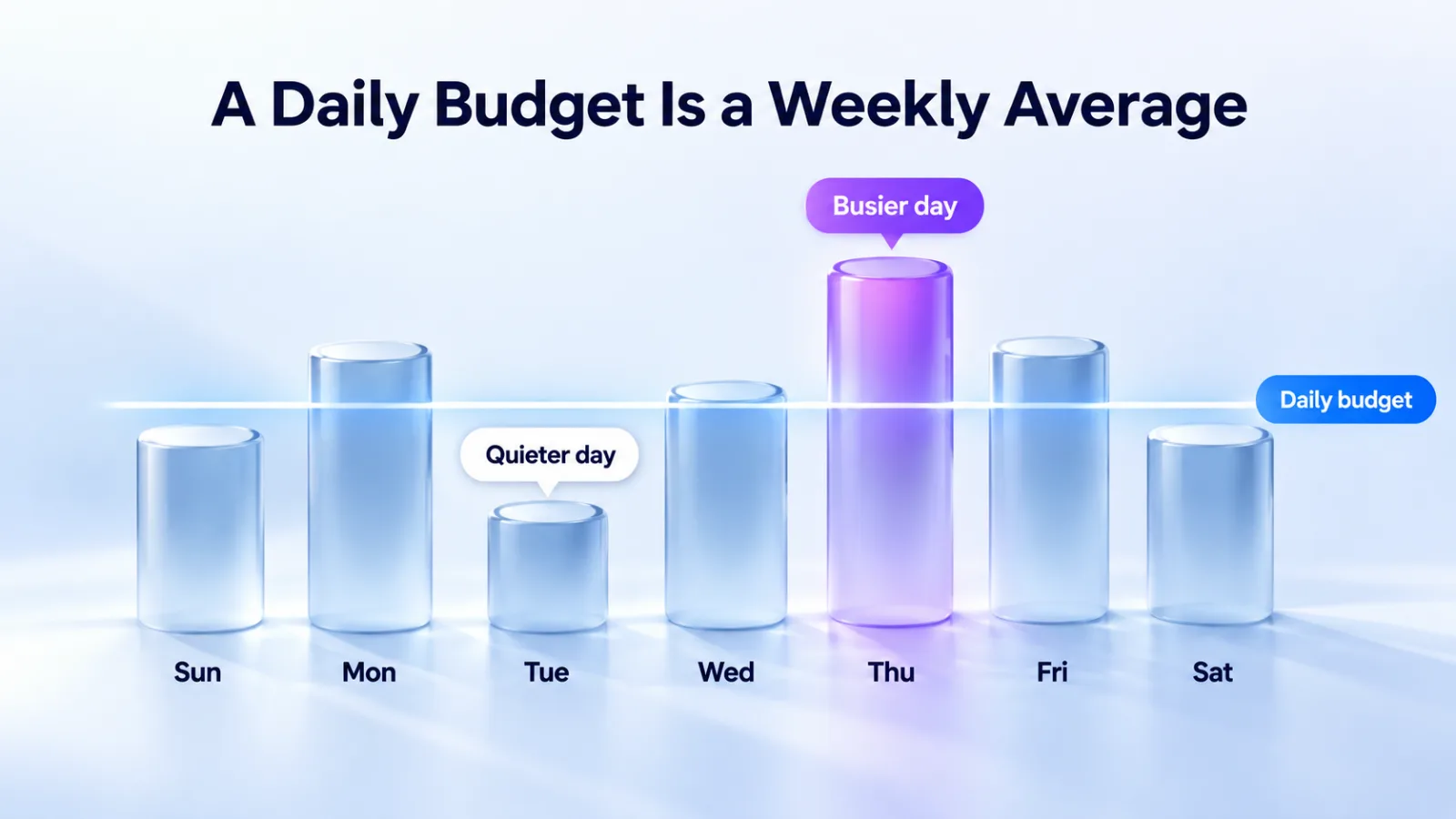
- Daily budget: the average you want to spend per day over seven days. One day can spend up to twice the amount, and unspent budget can be used later in the same seven days, but a week never exceeds seven times the daily budget. OpenAI’s own example: a $100 daily budget can spend more on some days, but no more than $700 over seven days.
- Campaign total budget: the most you’ll spend across the whole campaign, which Ads Manager paces over the schedule.
The budget week runs from Sunday to Saturday in your ad account’s time zone, and delivery doesn’t have to be even within a day or across the week. If a campaign uses up the week’s allowance early, it can stop delivering until the next week, even while it’s marked active.
With a daily budget and fixed bidding, the daily budget must be at least as high as your highest bid, including audience bid adjustments. If you use the Shopify app, budgets move in steps of $25; Ads Manager allows amounts in between.
How and when you’re billed
- Postpay: spend builds up as ads run, and self-serve accounts are charged to the saved card.
- Payment thresholds: each account gets a threshold. OpenAI’s example: with a $25 threshold, the card is charged once $25 of unpaid spend accrues. Any balance left at month end is charged then. Thresholds can rise over time with good payment history, and support won’t change them on request.
- Card holds: adding a card can trigger a temporary authorization hold that may stay visible for eight days or more.
- Failed payments: ads may stop delivering until the payment method is fixed.
- After a pause: ads can keep appearing for up to 24 hours, and that spend is billable.
- Spend reporting lags: spend can take 7–8 hours to show in Ads Manager, so a zero doesn’t mean nothing is accruing.
Self-serve card accounts can’t set an account-wide daily spending cap; that option is limited to eligible accounts on invoice terms. Campaign budgets are the control you have.
What about the $60 CPM and $200,000 minimum?
Both figures come from press reports during the early pilot, before self-serve buying existed:
| Date | What was reported | Source |
|---|---|---|
| 27 Jan 2026 | Citing The Information, BleepingComputer reported that OpenAI planned to charge up to $60 per 1,000 views. | BleepingComputer |
| 31 Jan 2026 | Adweek reported that OpenAI confirmed a $200,000 minimum commitment for ChatGPT Ads, nine days before the US test began. | Adweek |
Neither describes how ads are bought now. On 5 May 2026 OpenAI began rolling out self-serve Ads Manager and cost-per-click bidding, and today’s documentation describes an auction with small daily minimums set by billing currency, such as $25 a day per campaign for accounts billed in US dollars.
Sizing a first test
Work backwards from what a conversion is worth to you. Here’s an illustrative example, not a benchmark:
- A daily budget of $50 spends about $1,520 a month: $50 × 30.4 days.
- At $3 per click, that buys about 507 clicks.
- If 3% of clicks convert, that’s about 15 conversions, at roughly $100 each.
- If a conversion is worth $100, you’re breaking even on ad spend. Your break-even cost per click is the value times the conversion rate: $100 × 3% = $3.
Swap in your own conversion rate and order value in the cost calculator, which opens with this example loaded. Because conversions take 24–48 hours to report and results swing from day to day, plan for a test that runs for weeks.
Getting more from the same budget
- Send each ad to the most relevant page, not your homepage. OpenAI’s ad guidance recommends product, collection or content pages.
- Write several distinct titles and descriptions per offer, each with a different angle, so the system can find more moments where your ad is relevant.
- Use context hints to describe situations your page and ad don’t cover. See our context hints guide.
- Set up conversion tracking before you spend, so you judge campaigns on outcomes rather than clicks.
Questions
Do I pay per conversion?
No. Even conversion-optimized campaigns bill per click or per impression. Conversion optimization changes who the system shows ads to, not what you’re charged for.
Can I cap my monthly spend?
Use a campaign total budget, or keep a daily budget in mind as roughly 30.4 days of spend a month. An account-wide daily cap is only available to eligible accounts on invoice terms.
What’s the minimum budget outside the US?
It depends on your ad account’s billing currency. OpenAI publishes a daily minimum per campaign for 30 currencies, such as 15 EUR, 15 GBP, 725 INR, 2,500 JPY and 25 AUD. Our availability tracker lists them all.
What does an agency add to the cost?
Agency fees are separate from ad spend, which you pay to OpenAI through your own account. Our fees are on the pricing page.
Sources
- Ads in ChatGPT: the basics, OpenAI Help Center
- Billing and payment, OpenAI Help Center
- Create campaigns and Daily budgets, OpenAI Help Center
- Conversion-optimized campaigns, OpenAI Help Center
- Create ads for ChatGPT Ads and Set up ChatGPT Ads for Shopify, OpenAI Help Center
- New ways to buy ChatGPT ads, OpenAI, 5 May 2026
- Reported, not confirmed by OpenAI: BleepingComputer, 27 January 2026; Adweek, 31 January 2026
OpenAI sources checked on 27 September 2026.