A ChatGPT ad is a labeled card that appears below a ChatGPT answer, with the advertiser’s name and logo, a title, a short description, an image and a link. Product ads add prices and ratings from a feed.
The ChatGPT Ads examples below cover eight industries. Each one shows the question, the ad, the context hint behind it and the landing page. They’re illustrations we wrote to OpenAI’s rules, with invented brands, not real ads or results.
Figures are OpenAI’s unless labeled as reported. Every platform fact links to OpenAI’s documentation, the example ads are illustrative, and where we give our own view, we say so.
What a ChatGPT ad looks like
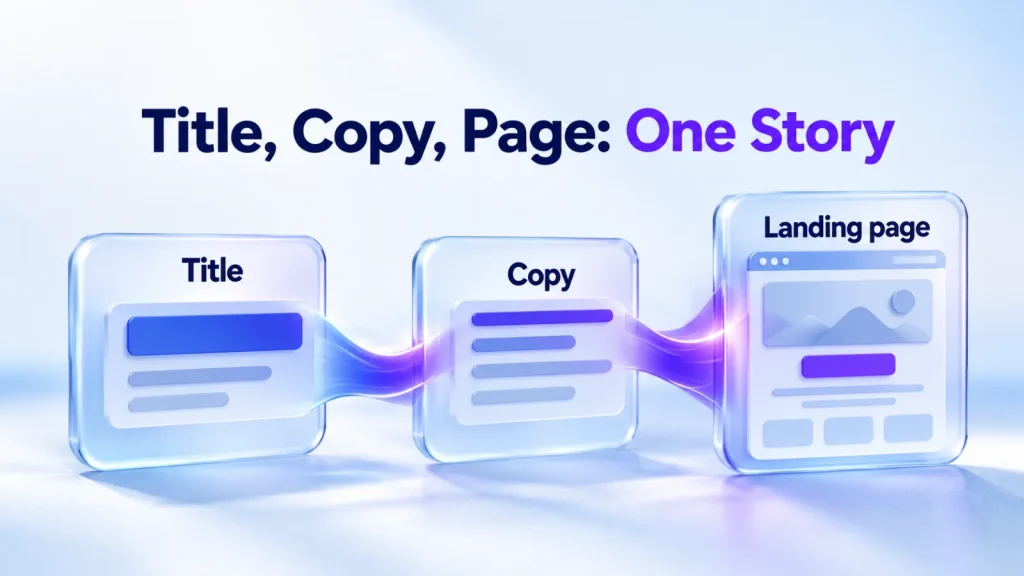
Every standard ad has the same six parts. OpenAI lists them in its introduction for advertisers.
| Part | What it is | Limit |
|---|---|---|
| Advertiser name | Your brand name, shown on every ad | Set in the account |
| Favicon | Your logo | Set in the account |
| Title | The headline | Up to 50 characters, 16 to 24 recommended |
| Copy | The description | Up to 100 characters, 32 to 48 recommended |
| Image | The creative | Square PNG or JPG, up to 1200 by 1200 pixels |
| Landing page | Where the click goes | Must load and allow OpenAI’s crawlers |
Ads appear below the end of a response, labeled as sponsored and set apart from the answer. One response can show one or more ad units. A unit can feature one or more items from one advertiser, or from several. Each ad has a three-dot menu with Hide ad, Report ad, About this ad and Ask ChatGPT.
Product ads and other formats
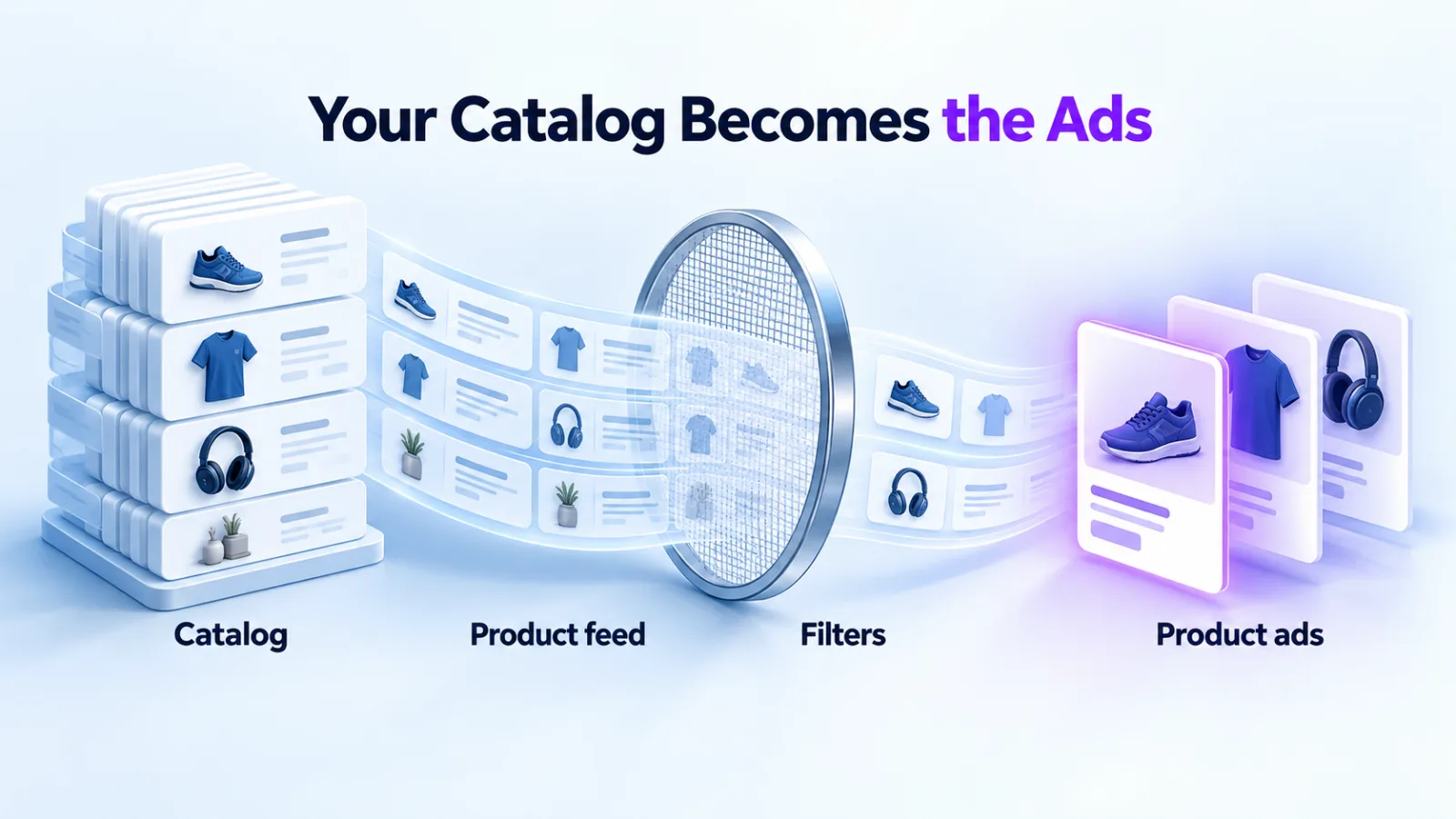
Stores with a product feed can run product ads. They’re built from the feed rather than written one by one. OpenAI says product ads show an image, title, star rating, price, sale price and brand.
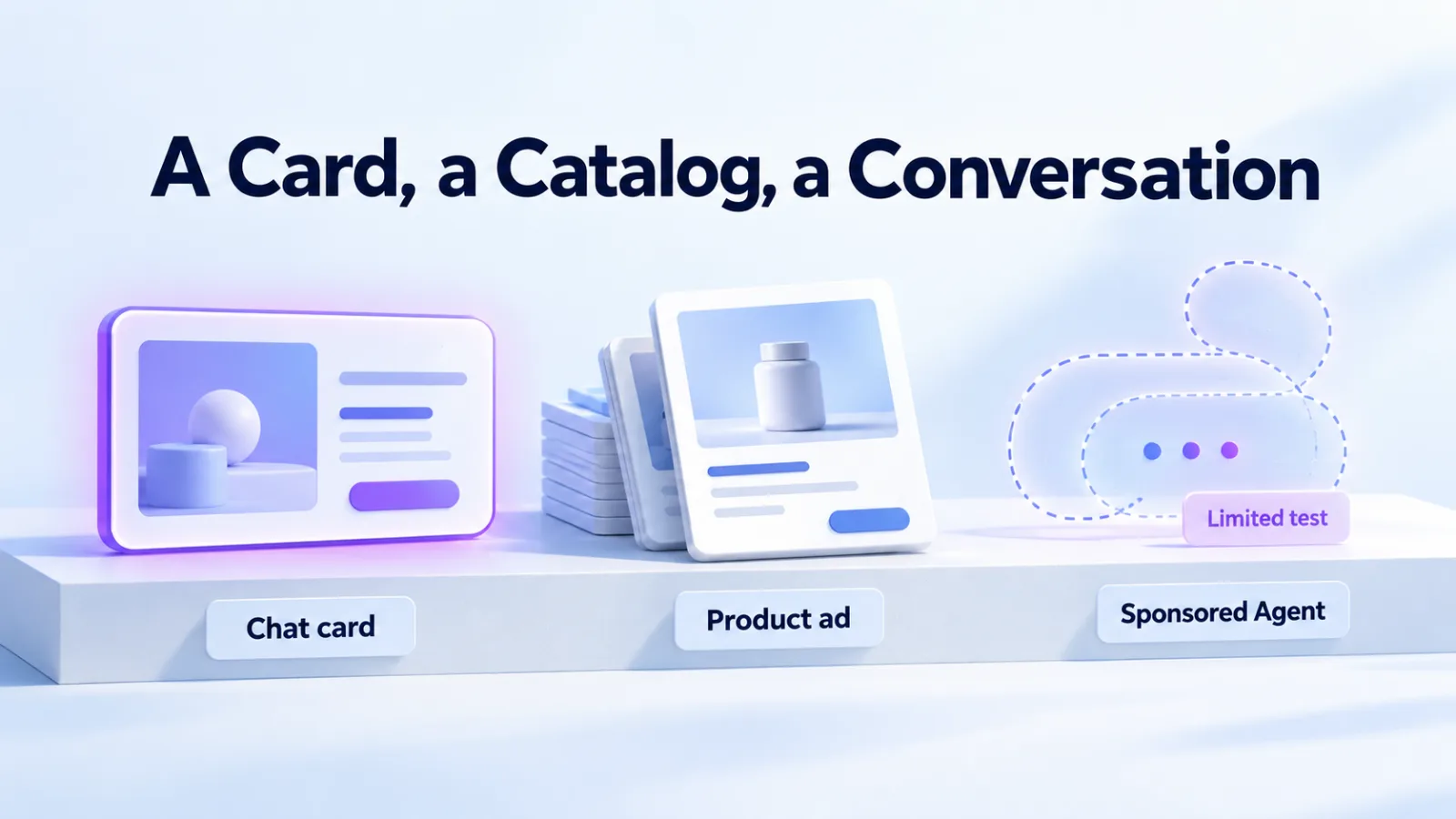
| Format | What it shows | Status |
|---|---|---|
| Chat card | Name, logo, title, copy, image and link | Available |
| Product ad | Feed products with image, title, rating, price and brand | Available with a product feed |
| Product cards | Several products in one ad, each card with its own clicks | Card metrics in the reporting API for feed campaigns |
| Sponsored Agents | A labeled chat with a business’s AI representative, opened from an ad | In testing, with selected advertisers |
Our ad formats guide covers every spec, and the product feed guide covers the feed.
How to read these ChatGPT Ads examples
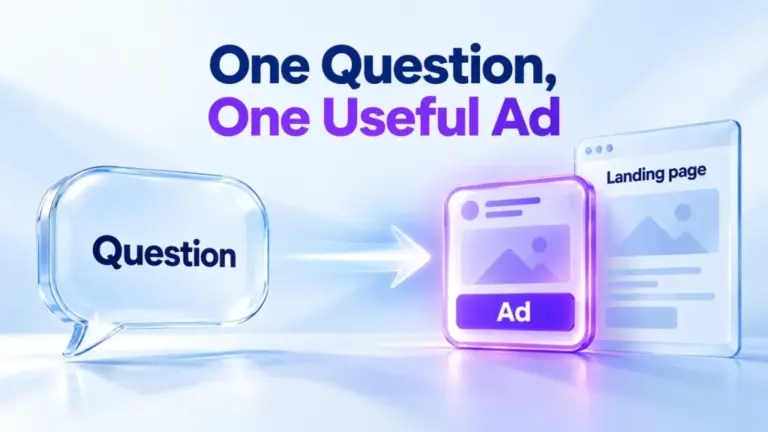
Each example starts with a question someone might ask ChatGPT, then shows an ad that could appear below the answer. It adds the context hint behind the ad and the page the click goes to. Context hints do the job keywords do in Google Ads, but they describe a situation instead of listing search terms.
Character counts are for the title and the copy. Each example sits inside OpenAI’s recommended lengths or close to them. For hints on their own, see our context hint examples by industry.
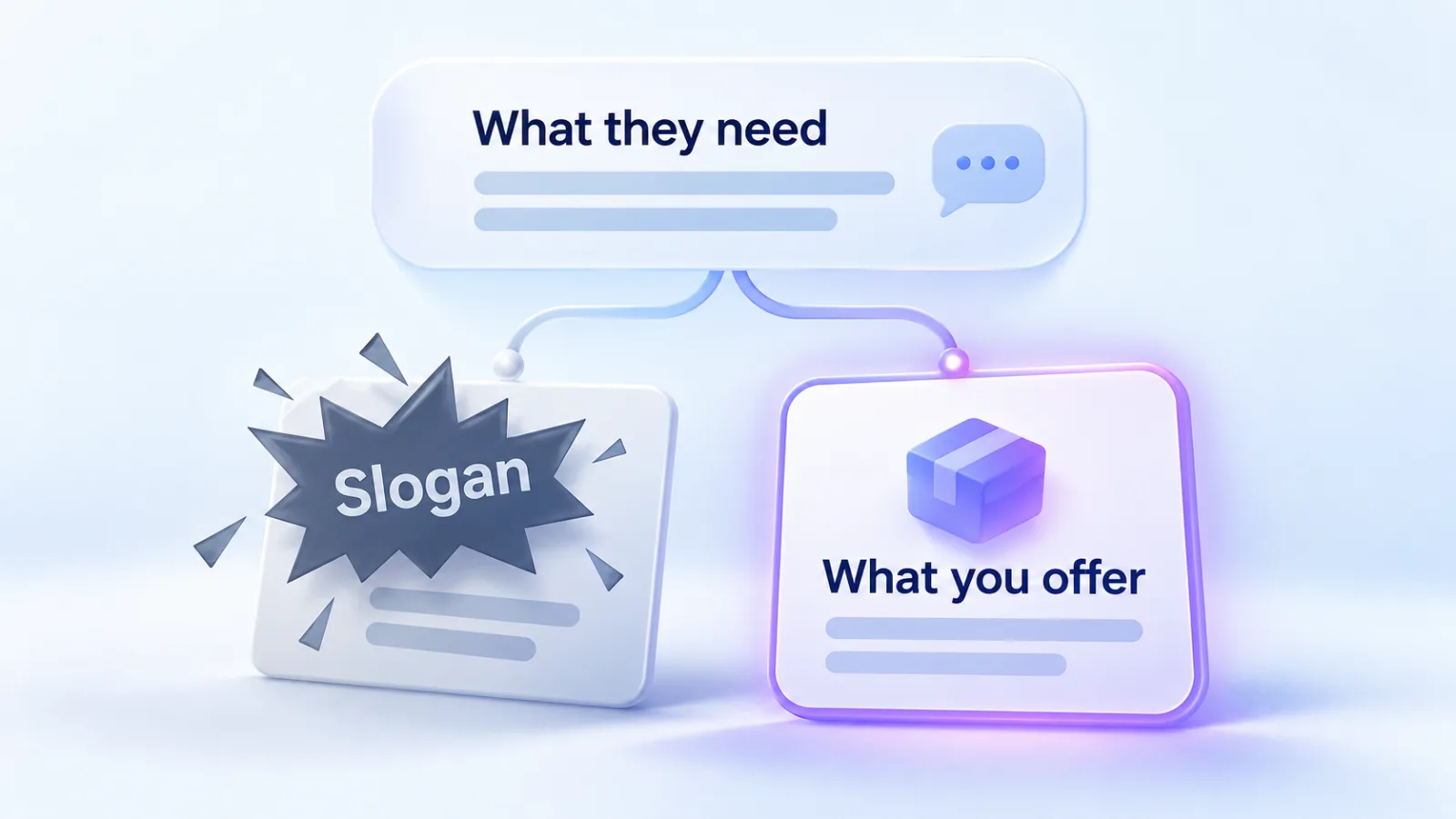
Three rules from OpenAI’s creative guidance shape every example. Spell out the value in the title. Use the copy to add something the title doesn’t say. Link to the most relevant page, which is rarely the homepage.
Ecommerce: running shoes
| Part | Example |
|---|---|
| Question | “I’m starting to run for a 5K. What shoes should a beginner look for?” |
| Title | Beginner running shoes (22 characters) |
| Copy | Cushioned pairs for your first 5K, free returns (47 characters) |
| Context hint | Cushioned everyday running shoes for beginners training for their first 5K |
| Landing page | A beginner’s running shoe collection, not the homepage |
The hint is OpenAI’s own example of a good one: specific about who and when. Our context hints guide explains how to write hints like it. The copy adds the free returns, which answers a beginner’s worry about fit. Stores with a feed could run this as a product ad instead, showing shoes with prices and ratings.
Software: bookkeeping for retailers
| Part | Example |
|---|---|
| Question | “How do I reconcile my Shopify sales with my shop’s card terminal?” |
| Title | Retail bookkeeping software (27 characters) |
| Copy | Match online and in-store sales automatically (45 characters) |
| Context hint | Bookkeeping software for growing retailers that need to reconcile online and in-store sales |
| Landing page | The feature page for sales reconciliation, with a free trial |
Again the hint is OpenAI’s example. The title runs a little past the recommended length, which is allowed up to 50. Our view: for software, the landing page matters more than the ad. A page that shows the reconciliation screen converts a curious reader into a trial.
Local services: emergency plumbing
| Part | Example |
|---|---|
| Question | “Water is coming through my kitchen ceiling. What should I do right now?” |
| Title | 24/7 emergency plumbers (23 characters) |
| Copy | Licensed Chicago plumbers, fast callouts (40 characters) |
| Context hint | Residential plumbing services available in Chicago |
| Landing page | An emergency call-out page with the phone number at the top |
OpenAI uses “Residential plumbing services available in Chicago” to show a hint that describes a business. It contrasts it with “Show this ad only to people in Chicago”, which is a delivery instruction hints can’t enforce. Location targeting does that job. Our local services guide covers the setup.
Travel: a weekend city break
| Part | Example |
|---|---|
| Question | “Where should we go for a long weekend in Europe in November?” |
| Title | November city breaks (20 characters) |
| Copy | Three-night trips with flights and central hotels (49 characters) |
| Context hint | Short city breaks in Europe for couples planning autumn weekend trips |
| Landing page | A page of November city break packages |
Travel is one of the consumer categories OpenAI says ads are focused on in the early period. The copy names what’s included, which helps someone comparing options. Casinos can advertise lodging and travel, but gambling itself isn’t allowed.
Education: learning a language
| Part | Example |
|---|---|
| Question | “What’s the fastest way to get conversational in Spanish before a trip?” |
| Title | Spanish for travelers (21 characters) |
| Copy | Ten-minute daily lessons built around real trips (48 characters) |
| Context hint | Language learning app for adults preparing to travel who want practical speaking skills |
| Landing page | The travel Spanish course page, with a free first lesson |
The hint names the circumstance, a coming trip, as well as the subject. That’s the “when” part of OpenAI’s what, who and when framework.
B2B services: payroll for small teams
| Part | Example |
|---|---|
| Question | “We’re hiring our first five employees. How do we handle payroll?” |
| Title | Payroll for small teams (23 characters) |
| Copy | Run payroll and filings for 2 to 50 staff (41 characters) |
| Context hint | Payroll software for small businesses hiring their first employees |
| Landing page | A small business payroll page with pricing |
Reaching business buyers has a limit. Ads show only on the Free and Go plans, not on Business or Enterprise accounts. Founders of small companies often use personal accounts, which makes this a better fit than enterprise software. Our B2B and SaaS guide explains the trade-off.
Home: furniture
| Part | Example |
|---|---|
| Question | “What size dining table fits a small apartment for four people?” |
| Title | Small-space dining tables (25 characters) |
| Copy | Seats four, folds to a console when not in use (46 characters) |
| Context hint | Space-saving dining furniture for apartment renters who host small dinners |
| Landing page | A collection of compact dining tables |
OpenAI used a dining table to introduce Sponsored Agents: a shopper with questions about fit, seating and care. Where Sponsored Agents become available, this is the kind of product that benefits from a follow-up conversation.
Legal: a US law firm
| Part | Example |
|---|---|
| Question | “My employer hasn’t paid my overtime. Do I have a case in Texas?” |
| Title | Texas wage claim lawyers (24 characters) |
| Copy | Free consultation on unpaid overtime claims (43 characters) |
| Context hint | Employment law firm in Texas helping workers recover unpaid wages and overtime |
| Landing page | The firm’s wage and hour practice page |
OpenAI’s ad policy allows legal services in the US only, from advertisers licensed in the jurisdiction where the ad shows. Outside the US, this ad isn’t allowed. Our law firms guide covers the rules.
What these examples have in common
Five patterns repeat across all eight examples, and we drew them from OpenAI’s creative guidance. Any term you don’t recognize is in our ChatGPT Ads glossary.
| Pattern | Why it helps |
|---|---|
| The title names the thing and who it’s for | The reader knows at a glance whether it fits |
| The copy adds one concrete detail | A price point, an inclusion or a time saving, if it’s true |
| The hint describes a situation | Context hints guide relevance, and situations match conversations better than lists of words |
| The landing page continues the ad | OpenAI asks for the most relevant page, not the homepage |
| Nothing imitates ChatGPT | The ad policy bans ads that look or sound like part of the product |
What gets ads rejected
Every example above would fail if it broke OpenAI’s baseline standards. Claims must be true, including about pricing and outcomes. Language must be professional. Ads can’t imitate ChatGPT’s interface or voice. And the landing page must match the ad, from end to end.
OpenAI’s own example of a mismatch is a food delivery ad linking to alcohol delivery. Our policy tracker lists every category by country.
Write your own
Start from a question your customers ask. Write the title as the answer, add one detail in the copy and point the click at the page that answers it.
Then check the lengths in our ad preview tool, and read the ad creative guide for more on testing variations. For rules and risks in your sector, start from our ChatGPT Ads by industry pages.
Frequently asked questions
Are these real ChatGPT ads?
No. They’re illustrations we wrote to show how OpenAI’s rules apply in different industries. The brands are invented and we make no claim about their results. The format, limits and policies they follow come from OpenAI’s documentation.
Where do ads appear in ChatGPT?
Below the end of a response, labeled as sponsored and visually separate from the answer. OpenAI says ads don’t influence answers. Check OpenAI’s Help Center article “Ads in ChatGPT” for where ads do and don’t appear, including in the ChatGPT Atlas browser and in Temporary Chats.
How long can a ChatGPT ad title be?
Up to 50 characters, with 16 to 24 recommended. The description runs up to 100 characters, with 32 to 48 recommended. Shorter titles are easier to read on a phone, and our ad preview tool checks both lengths.
Can one ad show several products?
Yes. OpenAI says an ad unit can feature one or more items from one advertiser or from several. For product-feed campaigns, the reporting API counts product card impressions and clicks separately from ad clicks. A card impression isn’t a billable ad impression.
Who sees these ads?
People on the Free and Go plans, and people using ChatGPT logged out. Plus, Pro, Business, Enterprise and Edu accounts don’t see ads, and nor do accounts identified as under 18. Logged-out ads are limited to content suitable for all audiences.
Do I need a different ad for each conversation?
No. You write a set of ads and context hints per ad group, and OpenAI matches them to conversations. Its guidance is to build several title and copy variations for each offering, each with a different angle. That gives the system more chances to show them.